

When you need to separate complex mixtures, choosing between ion chromatography and HPLC can feel tricky. Each technique operates on distinct principles and suits different types of compounds. Understanding how they differ in separation methods, detection Chlorine test, and performance can help you make the right call for your specific analysis. But what exactly sets them apart, and which one fits your lab’s needs best?
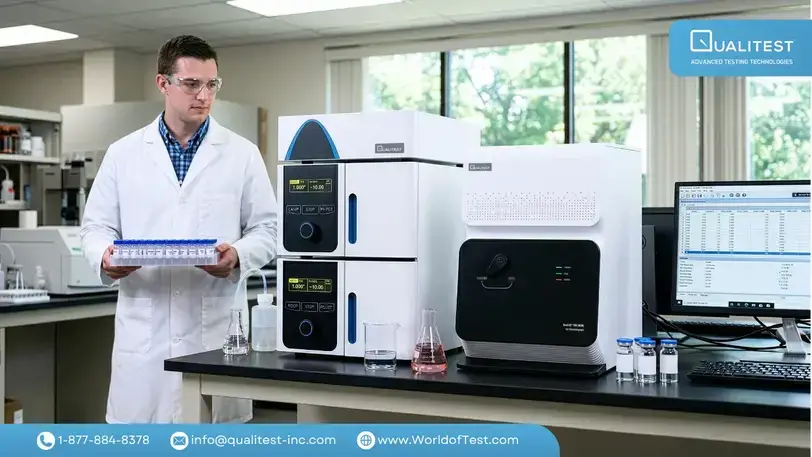
How Ion Chromatography and HPLC Differ in Separation Principles
Although both Ion Chromatography (IC) and High-Performance Liquid Chromatography (HPLC) separate compounds in a mixture, they rely on different principles to do so.
In IC, you focus on charged particles—ions—and their interaction with a resin that swaps ions based on charge and affinity. This means IC excels at separating anions and cations, giving you sharp insight into ionic species.
HPLC, on the other hand, uses a broader approach Lab Alliance. You separate compounds based on their interactions with a stationary phase and a liquid mobile phase, considering factors like polarity, size, and hydrophobicity. This flexibility allows you to analyze a wide range of molecules beyond ions.
Understanding these principles empowers you to choose the method that fits your analysis needs and keeps your work efficient and precise.
Key Instrument Components in Ion Chromatography and HPLC
When you compare Ion Chromatography and HPLC, understanding their key instrument components helps clarify how each technique operates. Both systems share core parts like pumps, columns, detectors, and autosamplers, but they differ in specifics.
In Ion Chromatography, you’ll find suppressors that reduce background conductivity, enhancing ion detection. The columns are specially designed to separate charged species.
HPLC uses various column chemistries tailored to your sample’s properties, like reversed-phase or normal-phase. Detectors in HPLC range from UV-Vis to fluorescence, unlike the conductivity detectors common in IC.
Pumps in both deliver solvent or eluent precisely, but IC often requires gradient elution with carefully controlled ionic strength.
Knowing these components lets you pick the right tool and configure it freely for your analysis needs.
Compounds Best Analyzed by Ion Chromatography and HPLC
Since Ion Chromatography and HPLC target different chemical properties, the compounds you analyze with each technique vary considerably. You’ll pick Ion Chromatography when dealing with charged species like inorganic ions or organic acids. HPLC suits a broader range, especially neutral or non-ionic molecules.
Here’s a quick breakdown:
- Ion Chromatography excels at analyzing anions (e.g., chloride, nitrate) and cations (e.g., sodium, potassium).
- It’s ideal for organic acids and bases in environmental or food samples.
- HPLC handles complex mixtures like pharmaceuticals, lipids, and peptides.
- It’s your go-to for non-volatile, thermally unstable compounds needing high-resolution separation.

Sensitivity, Speed, and Accuracy: Ion Chromatography vs HPLC
Choosing between Ion Chromatography and HPLC often comes down to more than just the types of compounds you need to analyze; you’ll also want to take into account how sensitive, fast, and accurate your results need to be.
Ion Chromatography excels in detecting low concentrations of ionic species, giving you high sensitivity when working with trace anions or cations.
HPLC, on the other hand, offers versatile detection across a broader range of compounds and often delivers quicker run times, helping you speed up your workflow.
When it comes to accuracy, both techniques provide reliable, reproducible results, but your choice depends on your sample complexity and detection needs.
Ultimately, understanding these factors helps you work smarter, not harder, and maintain the freedom to tailor your analysis precisely.
Choosing the Right Technique for Your Lab: Ion Chromatography or HPLC
Although both Ion Chromatography and HPLC offer powerful analytical capabilities, selecting the right technique for your lab depends on your specific sample types, detection goals, and workflow demands. You’ll want to contemplate where each method excels and what fits your freedom to explore diverse analyses.
Here’s what to weigh:
- Sample nature: Choose Ion Chromatography for ionic species; HPLC suits a wider range, including non-ionic compounds.
- Detection needs: Ion Chromatography excels at trace anions and cations; HPLC offers versatility with various detectors.
- Speed and throughput: HPLC generally runs faster, ideal for high-volume labs.
- Operational ease: Ion Chromatography systems often require less maintenance, freeing up your time.
Balance these factors, and you’ll select the technique that opens your lab’s full potential.
Conclusion
When choosing between ion chromatography and HPLC, consider what you need to analyze and how quickly. If you’re focusing on ionic species like anions or cations, ion chromatography is your best bet. For a wider range of compounds, including pharmaceuticals and lipids, HPLC offers more versatility. Both techniques have unique strengths in sensitivity and speed, so pick the one that fits your sample type and detection needs to get the most accurate, reliable results.

Leave a Reply